

Last Updated: April 2026
U.S. corporations donated $44.40 billion to charitable causes in 2024, the highest corporate giving total on record, according to Giving USA 2025. For nonprofits, that’s why corporate sponsorship for nonprofits has become one of the most competitive funding channels available, and why the gap between “companies are giving” and “your organization gets funded” comes down to preparation, positioning, and knowing how to structure the ask.
This guide covers what corporate sponsors actually look for, how to structure a compelling proposal, what your sponsorship packages should include, and one topic most fundraising articles skip entirely: the IRS tax rules that determine whether your sponsorship income is tax-free or subject to unrelated business income tax (UBIT).
Whether you’re pursuing your first corporate partner or trying to improve your renewal rate, here’s what you need to know. (thank you letter for corporate sponsors)
- What it is: Corporate sponsorship defined, and how it differs from donations, grants, and cause marketing
- What sponsors want: CSR motivation, ESG reporting needs, and timing your outreach right
- How to structure the ask: Proposal components and tiered sponsorship packages
- IRS compliance: When corporate sponsorship income is tax-free vs. UBIT-liable under Section 513(i)
- How to keep sponsors: Stewardship touchpoints that drive renewal
What Is Corporate Sponsorship for Nonprofits?
Corporate sponsorship is an arrangement where a company provides financial support, goods, or services to a nonprofit in exchange for public acknowledgment, brand visibility, or access to the nonprofit’s audience and community.
It’s worth distinguishing corporate sponsorship from three related concepts that often get confused:
- Corporate donation: A philanthropic gift with no expectation of public acknowledgment or a return benefit. Donations are often unrestricted.
- Grant funding: Application-based funding typically from a foundation, government agency, or corporation’s own philanthropic arm. Subject to specific eligibility criteria and reporting requirements.
- Cause marketing: A co-branded arrangement where a company and nonprofit collaborate on a campaign and share revenue or awareness outcomes. More complex to structure than a standard sponsorship.
The distinguishing characteristic of a sponsorship is the expectation of something in return. That expectation (and how it’s structured) is also what creates a tax question on the nonprofit’s side. More on that in the IRS section below.
Types of Corporate Sponsorship
Corporate sponsorship takes several forms. Understanding each type helps you match the right ask to the right prospect.
Cash Sponsorships
A direct monetary contribution in exchange for recognition. This is the most common form and the most flexible: the cash can fund an event, a program, or your general operations depending on how the agreement is structured.
In-Kind Sponsorships
Products or services donated instead of cash. Examples include a printing company providing event programs, a restaurant providing catering for a gala, or a technology company providing software licenses for your organization. In-kind contributions often have real dollar value but require different acknowledgment and accounting treatment than cash.
Event Sponsorships
Tied to a specific fundraising event (a gala, 5K, auction, or golf tournament). Sponsors typically receive naming rights, logo placement on all event materials, and audience access. Event sponsorships are the entry point for most nonprofits because they offer sponsors a concrete deliverable and a natural deadline. If you’re structuring your first event sponsorship ask, see our guide to event sponsorship approaches for a practical breakdown.
Program or Mission Sponsorships
Tied to an ongoing program or cause area rather than a one-time event. A corporation might sponsor your after-school tutoring program or your annual community health fair for a full year. These are more complex to structure but often yield stronger CSR narratives because the sponsor can attach to a specific, measurable impact story.
Media and Promotional Sponsorships
In-kind or cash contributions in exchange for co-promotion. The sponsor is acknowledged as a community or cause partner in your newsletters, social media, and press materials. These are often lower-dollar but easier to execute and a good starting point for building a relationship with a new corporate partner.
What Corporations Get from Sponsoring Nonprofits
Corporate sponsorships aren’t charitable gifts. They’re business decisions. Understanding what motivates the sponsor is a major factor in whether your proposal gets funded or filed away.
CSR and ESG reporting needs: Many mid-size and large companies are under pressure from investors, board members, and regulators to demonstrate environmental, social, and governance commitments. Sponsoring a local nonprofit is one of the most visible and documentable CSR actions available to them. The easier you make it to generate an impact report, the more attractive your organization becomes as a partner.
Employee morale and retention: Companies that sponsor nonprofits often give employees volunteer opportunities or event tickets as part of the arrangement. In competitive talent markets, visible community involvement is a meaningful employee benefit.
Brand visibility with a specific audience: A sponsor’s goal is typically to reach your audience, not the general public. A healthcare company sponsoring a senior services nonprofit is paying for access to a specific demographic. The more precisely you can describe your audience in numbers (member count, event attendance, newsletter open rates), the stronger your pitch becomes.
Tax benefits: For the sponsoring company, corporate sponsorship payments are generally deductible as ordinary and necessary business expenses under IRC Section 162. (The nonprofit-side tax question (whether the income is UBIT-liable) is separate. See the IRS section below.)
Timing matters: Many corporate CSR and community investment budgets operate on a fiscal year cycle with a “spend or lose it” deadline. Reaching out in Q2 or Q3, well before Q4 budget pressure, to position yourself for consideration before available funds are committed elsewhere.
Is Your Nonprofit Ready for Corporate Sponsors?
Most sponsorship guides go straight to “here’s how to pitch.” But corporate sponsors evaluate nonprofits carefully before committing, sometimes as carefully as they evaluate marketing vendors. Organizations that can’t clearly describe their audience, demonstrate a track record, or produce a post-event report will struggle to close sponsorships regardless of how polished the proposal looks.
Before approaching corporate sponsors, work through this checklist honestly:
- Audience data: Can you describe your members, attendees, or beneficiaries in numbers? Sponsors pay for access to an audience. If you can’t answer “we have 850 active members, median age 38, across these three zip codes,” you’re asking a sponsor to make a blind investment.
- Track record: Have you successfully executed the event or program the sponsor would attach to? First-year events rarely attract major sponsors. One or two successful prior years (with attendance numbers and media coverage on file) dramatically improve your credibility.
- 501(c)(3) status confirmed: Most corporate donors require a copy of your IRS determination letter before issuing a check. Make sure yours is current and accessible.
- Decision-making process: Can you sign a sponsorship agreement without a three-month board delay? Slow decision-making is a red flag for corporate partners who operate on quarterly timelines.
- Accountability infrastructure: Can you produce a post-event impact report? Sponsors increasingly use these for ESG reporting, and sponsors who don’t receive one rarely renew.
If three or more of these are not yet in place, focus on smaller local sponsors (regional businesses rather than Fortune 500 companies) while you build the infrastructure that major corporate sponsors require. In working with nonprofits on the Raklet platform, the most common gap we see before a first sponsorship ask is the absence of structured audience data: organizations often know roughly how many people attend their events, but can’t produce that number on demand with any supporting breakdown. Organizations that are still getting started can also benefit from working through the broader organizational setup first. Our guide to starting a nonprofit covers the legal and operational foundations.
How to Find the Right Corporate Sponsors
The most successful sponsorship programs don’t start with cold outreach to Fortune 500 companies. They start with warm relationships and systematic research.
Start with your existing network: Companies where your board members, major donors, or volunteers work are your highest-conversion prospects. A board member who can make an internal introduction eliminates the cold-pitch entirely. Before sending a single email externally, map out which companies your strongest relationships touch.
Review past sponsors: Your own event history and those of comparable nonprofits in your region reveal which companies are already active sponsors in your cause area. A company that sponsored three local nonprofit galas last year has an active budget and a decision-making process you can learn from.
Look for published CSR commitments: Companies that release annual CSR or sustainability reports have formal budgets behind those commitments. These reports often list current nonprofit partners, meaning you can identify which organizations are already in their giving portfolio and position your ask accordingly.
Search LinkedIn strategically: Search for “corporate social responsibility,” “community investment,” or “philanthropy” titles at target companies. These are the people who manage the budget and often prefer receiving a well-researched proposal over a cold call.
Filter by mission alignment, not just budget: A company that publicly champions education causes is a far easier pitch for a scholarship nonprofit than a company with a larger community budget but no stated values alignment. Misaligned sponsorships tend to be one-year relationships. Aligned ones renew.
Track your outreach systematically: Sponsorship conversations often span months. Use a simple spreadsheet or nonprofit CRM to record who you contacted, when, their response, and when to follow up. Corporate decisions typically involve a CSR or community investment manager, plus budget sign-off from someone more senior, which means a follow-up three to four weeks after sending a proposal is normal and expected.
How to Write a Corporate Sponsorship Proposal

A corporate sponsorship proposal is not a grant application. It’s a business proposal. It should be concise (4-8 pages for a major sponsorship, 1-2 pages for a smaller community partnership ask), visually clean, and focused on what the sponsor gains, not what your organization needs.
A strong proposal includes these components:
- Cover page: Your nonprofit’s name and logo, the event or program name, the date of the proposal, and (if you have design capability) a space reserved for the sponsor’s logo. This signals that the proposal is tailored to them specifically.
- Mission and audience summary: Two short paragraphs maximum. Who you serve, in numbers. Not paragraphs of mission text. Think: “We serve 1,200 low-income students in three school districts. Our annual gala draws 400 attendees and 2,000 newsletter readers.”
- Sponsorship opportunity: One paragraph describing what the sponsor is being asked to support and why it’s relevant to their brand or CSR priorities. Be specific about the alignment.
- Sponsorship packages: Tiered options with clear pricing and deliverables (see the packages section below). Give the sponsor control over the investment level.
- Deliverables and visibility: A specific list of every tangible benefit the sponsor receives: logo placements, public acknowledgments, speaking opportunities, social media mentions, website listing, post-event media coverage. Be precise about timing and format.
- Timeline: When the decision is needed, when deliverables occur, and when the event or program takes place.
- Impact metrics: How you will report back after the event or program: attendance numbers, media coverage, social reach, photos of logo placements. Showing this upfront signals that you’re a professional partner, not someone who disappears after the check clears.
- Contact and next steps: One named person with a direct phone number and email. Not “contact us”: a specific human who owns the relationship.
Corporate Sponsorship Packages and Tiers
Offering tiered sponsorship packages does two things: it gives corporate partners a way to participate at a level that fits their budget, and it anchors conversations around value rather than a single take-it-or-leave-it ask.
A typical event sponsorship package structure looks like this:
| Tier | Investment | Key Benefits |
|---|---|---|
| Presenting Sponsor | $5,000+ | Naming rights (“Annual Gala presented by [Company]”), speaking slot, premium logo on all materials, 4 event tickets, post-event impact report |
| Gold Sponsor | $2,500 | Logo on event signage and program, social media acknowledgment (3 posts), 2 event tickets |
| Silver Sponsor | $1,000 | Logo on event signage, website listing, 1 event ticket |
| Community Partner | $250–$500 | Website listing as a community supporter, social thank-you post |
Adjust pricing based on your event’s size, audience, and geographic market. A $5,000 presenting sponsorship is reasonable for an event drawing 500+ attendees in a major metropolitan area; it may be unrealistic for a 100-person community event in a smaller market. One way to anchor your pricing: look at what a comparable number of impressions would cost as a local digital ad or a community media sponsorship, which gives you a defensible number if a corporate partner asks how you arrived at the figure.
A note on the “Presenting Sponsor” tier: naming rights and exclusivity are powerful selling tools, but they also introduce an IRS consideration. If the presenting sponsor agreement includes language that could be read as advertising (comparative claims, promotional offers, calls to action), it may affect the tax treatment of that income. See the section below.
Always include a “custom” option above your highest tier for large corporate partners who want exclusivity arrangements that aren’t on your standard rate card.
IRS Rules: What Counts as a Qualified Sponsorship Payment?

Disclaimer: this section provides general educational information, not tax or legal advice. Consult a nonprofit attorney or CPA before structuring large or exclusive sponsorship arrangements.
One of the most common questions nonprofits have about corporate sponsorships is whether the income is taxable. The answer depends on how the arrangement is structured.
Under IRS Section 513(i), a qualified sponsorship payment is money (or property) a company pays to a nonprofit with no arrangement for a substantial return benefit beyond the nonprofit acknowledging the sponsor publicly. Qualified sponsorship payments are excluded from unrelated business taxable income (UBIT), meaning the nonprofit keeps 100% of the money, tax-free.
What counts as acceptable acknowledgment (not UBIT-triggering):
- Displaying the sponsor’s name, logo, or product lines
- Listing the sponsor’s website URL
- Describing the sponsor’s general service area or location
What crosses into advertising (and may trigger UBIT):
- Comparative language: “the best,” “the only,” “superior to competitors”
- Pricing information or promotional codes
- Direct calls to action: “Visit our website,” “Call today for a free estimate”
- Payments contingent on event attendance or revenue (“we’ll pay $5 per attendee over 300”)
Exclusivity and the UBIT question: If a sponsorship agreement grants the sponsor exclusive rights in a category (for example, “exclusive technology sponsor”), the IRS examines whether that exclusivity constitutes a substantial return benefit. According to the National Council of Nonprofits, the analysis turns on whether the exclusivity is a real competitive advantage for the sponsor. If it is, part of the payment may be treated as advertising rather than a qualified sponsorship payment.
A practical example: A local bank pays $3,000 to sponsor your annual benefit dinner. In return, your event program lists them as “Presenting Sponsor” with their logo and website URL. This is a qualified sponsorship payment: no UBIT. If you add a line to the program that reads “Offering the best mortgage rates in the region: visit [bank].com/special-offer”: that moves the acknowledgment into advertising, and the payment (or at least that portion) may be UBIT-liable.
For the sponsor’s side: Corporate sponsorship payments are generally deductible as ordinary and necessary business expenses under IRC Section 162 regardless of how the nonprofit classifies the income. The sponsor’s deductibility is a separate question from the nonprofit’s UBIT exposure.
For most standard event sponsorships where the acknowledgment stays within name-logo-URL territory, the UBIT risk is low. Larger, exclusive, or multi-year arrangements are worth a review with a nonprofit attorney before finalizing the agreement.
How to Steward Your Corporate Sponsors
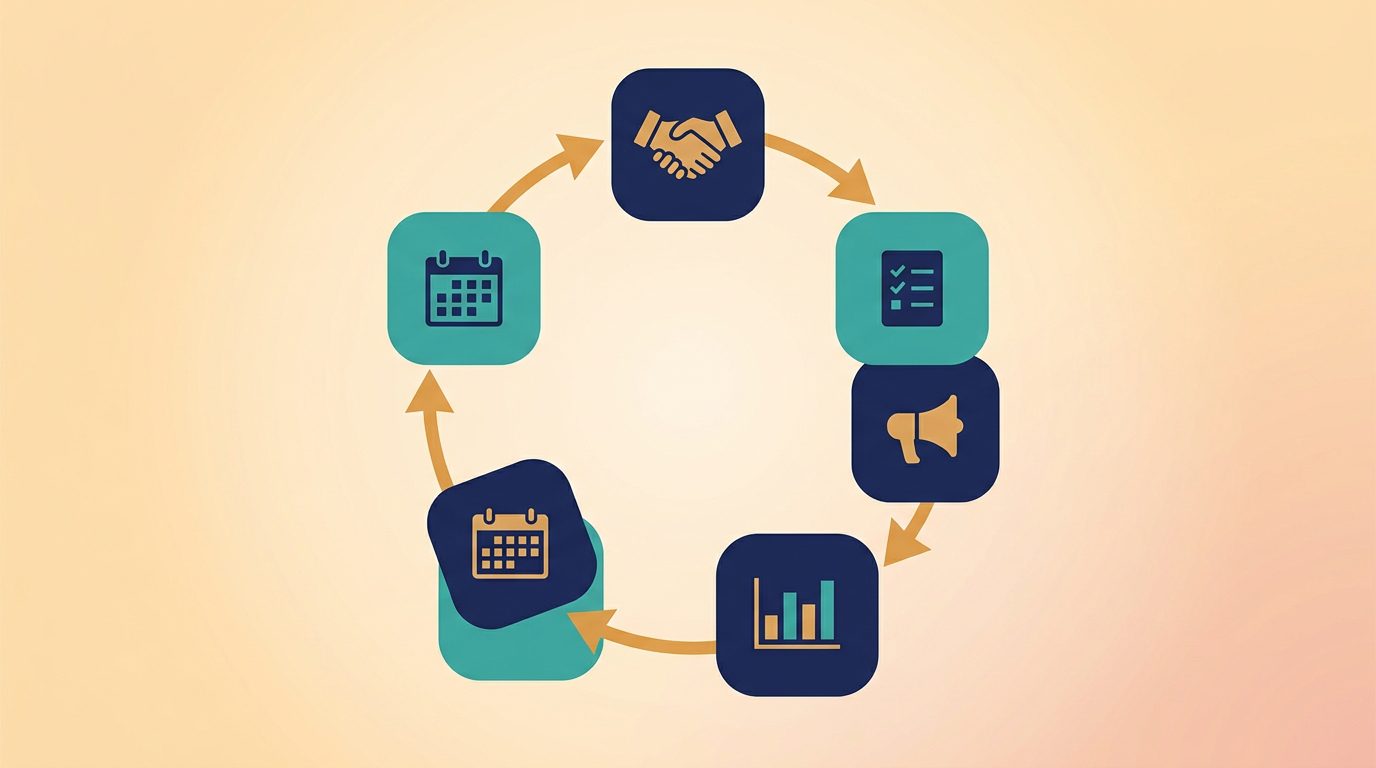
Getting a sponsor to say yes is the beginning of the work, not the end. The organizations with the highest renewal rates treat sponsor stewardship as a year-round relationship, not a transaction.
Key stewardship touchpoints:
- Confirm the agreement in writing within 48 hours of any verbal commitment. A simple one-page sponsorship agreement covering the investment amount, deliverables, and timeline protects both parties and signals professional seriousness.
- Provide a pre-event activation checklist: logo files needed, naming rights confirmation, speaking slot details, ticket allocations. Sponsors who have to chase you for logistics rarely renew.
- Deliver on every promised visibility item and document it. Take photos of logo placements, screenshot social mentions, save event program PDFs. This documentation becomes your impact report.
- Send a post-event wrap-up report within 30 days. Include attendance numbers, media coverage, social reach, and photos showing the sponsor’s logo in context. Companies using sponsorships for ESG reporting need this documentation, and sponsors who receive a professional wrap-up report once will expect one every year.
- Schedule the renewal conversation 90 days before your next event cycle, not 2 weeks before. Budget discussions happen months in advance. If you wait until your solicitation season, you may be too late for the sponsor’s annual planning cycle.
Stewardship also applies to sponsors who decline. A polite follow-up after a “not this year” (sharing event results and keeping them on your updates list) means they’re informed and primed when their budget opens up. If you’re also exploring other funding approaches alongside corporate sponsorship for nonprofits, our roundup of fundraising ideas for nonprofits covers complementary channels worth considering.
How Raklet Helps Nonprofits Land and Keep Corporate Sponsors
Stewardship requires data, and the same data that helps you write a wrap-up report is what makes your next corporate sponsorship for nonprofits pitch stronger: active member counts, event attendance history, engagement rates, and audience demographics. Nonprofits that can answer a sponsor’s core question (“who will see my brand, and how many of them?”) with verifiable audience data close more deals and see higher renewal rates. Raklet’s nonprofit platform gives organizations the member database, event management, and reporting tools to build and maintain that data foundation, so sponsorship conversations start with numbers rather than estimates. See how nonprofits and associations use Raklet to manage their communities and events.