

Last Updated: May 2026
The best membership management software for 2026 is the one that fits the way your organization actually works. For most growing associations, clubs, and professional networks, that means a platform with a flat-rate pricing model, automated dues and renewal workflows, and a member portal that does not require IT support. We compared 10 platforms across pricing, AI capabilities, and fit by organization type so you can match a tool to your situation, not the other way around. The picks below cover small clubs, donor-driven nonprofits, professional associations, chambers of commerce, and large enterprise societies.
Disclosure: Raklet is one of the tools we cover, and we develop and sell it. We have tried to be straight about where it fits and where other tools fit better. Pricing figures reflect publicly available rates and vendor announcements as of May 2026; actual quotes vary by organization size and contract.
Top Picks at a Glance
- Best for growing associations and clubs: Raklet, with flat-rate pricing and a free tier up to 50 contacts.
- Best for donor-driven nonprofits: Bloomerang or Neon CRM if donor retention is your primary metric; Zeffy if you need a fully free option.
- Best for established professional associations: MemberClicks for mid-size; GrowthZone or YourMembership/Member365 at enterprise scale.
What to Look for in Membership Management Software
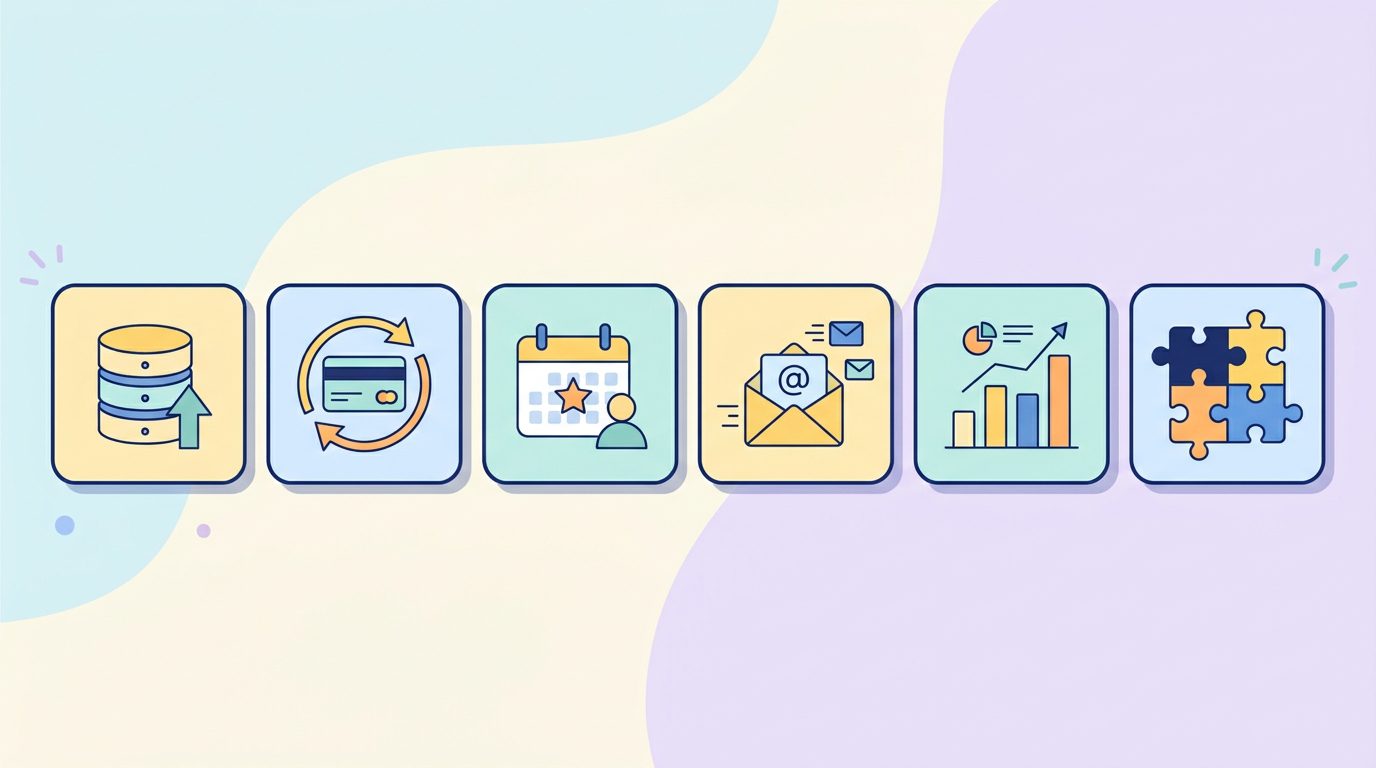
Before comparing tools, decide which features actually drive your day-to-day work. Most platforms market the same headline list. What separates them is depth in a few areas and the pricing model behind them.
Member database and self-service portal
Every platform stores contact records. The real question is what members can do for themselves. A strong member portal lets people update their profile, renew dues, register for events, and download their membership card without emailing the admin. Look for custom fields that fit your taxonomy (chapters, member types, certifications), a clean login flow, and a portal that does not feel like a 2010 web form. The portal is also where you set the tone for new members; the platforms that make it easy to welcome new members effectively tend to keep them past their first renewal.
Dues collection and pricing model
Pricing model is the single biggest cost decision you will make. Flat-rate tools (Raklet, JoinIt, Zeffy) charge a fixed monthly fee regardless of how many members you have, so costs stay predictable as you grow. Per-member tools (Wild Apricot/Membership360, MemberClicks) scale with member count, which is often cheaper at small sizes but can become expensive past a few hundred members. Whichever model you choose, make sure the platform handles recurring billing, failed payment retries, prorated upgrades, and member-facing receipts.
Event management
If your organization runs events more than a few times a year, event tools should be native, not an awkward add-on. Look for registration forms, ticketing with member-vs-non-member pricing, a calendar view for members, check-in workflows, and waitlists. Conference-style events need session selection and capacity rules.
Email and member communications
Bulk email is the baseline. Segmentation, automated welcome sequences for new members, and renewal reminders are where engagement gets serious. SMS is becoming standard for renewal nudges and event-day reminders. Check whether the platform sends from your domain (with proper authentication) or from a shared sending domain, which hurts deliverability. Renewal automation in particular is the single biggest software lever you have against membership churn.
Reporting and analytics
You should be able to answer four questions in under two minutes: how many active members do we have, what is our renewal rate, which events drive the most revenue, and which members are at risk of lapsing. Tools that bury this in custom report builders are tools your treasurer or board will hate.
Integrations
The integrations that matter most are accounting (QuickBooks, Xero), email marketing (if you already pay for Mailchimp or HubSpot), Zapier for everything else, and SSO if you are an enterprise. A native QuickBooks sync alone can save hours every month on reconciliation.
How We Evaluated These Tools
This list reflects the Raklet product team’s combined association-software market view across roughly a decade of building and selling a competing platform. We assessed each tool across five criteria: feature depth for core membership workflows, pricing transparency, AI or automation capabilities, real user reviews on G2 and Capterra, and fit by organization type. Tools were excluded if their pricing was completely opaque with no published starting point, if G2 or Capterra ratings fell below 3.8, or if the platform showed signs of stagnation: no product updates in 12+ months, no public roadmap, or ownership changes followed by silence. Pricing numbers cited below come from each vendor’s published rate card, sales-facing tier disclosures, or recent public quotes. Where we name a limitation, it is because it shapes the buying decision, not as a hedge.
The 10 Best Membership Management Software Tools for 2026
For a quick visual primer on what a modern membership platform looks like in practice, here is a short overview from Raklet, one of the tools we cover below.
Below are our top picks for 2026, ordered to serve different types of membership organizations. Each entry includes what the tool is, who it fits, its key features, AI and automation capabilities, pricing, and at least one honest limitation. Use the org-type guide at the end of this article to narrow your shortlist further.
| Tool | Best for | Pricing model | Starting price |
|---|---|---|---|
| Raklet | Growing associations, clubs, alumni | Flat-rate | Free up to 50; $49/mo |
| Wild Apricot / Membership360 | Established nonprofits already on the platform | Per-member tiered | ~$48/mo (up to 100) |
| MemberClicks | Mid-size professional associations | Custom quote | ~$350/mo |
| Neon CRM | Nonprofits combining fundraising and membership | Tiered | $99/mo |
| Bloomerang | Donor-centric nonprofits | Record-count tiered | $99/mo |
| Glue Up | Chambers and global associations | Custom quote | Low four figures/mo |
| GrowthZone | Trade associations and chambers | Custom quote | Low four figures/mo |
| JoinIt | Small clubs and community groups | Flat-rate | $29/mo |
| Zeffy | Small nonprofits on a zero budget | Free (tip-funded) | $0 |
| YourMembership / Member365 | Large enterprise associations | Custom quote | Low-to-mid four figures/mo |
1. Raklet: Best for Growing Associations and Communities
What it is: A cloud-based membership and community platform built for organizations that want a single tool covering members, dues, events, and communications without enterprise complexity.
Best for: Associations, clubs, professional networks, alumni groups, and chambers between roughly 50 and 5,000 members.
Key features: Member database with unlimited custom fields, automated dues billing, digital membership cards, a branded mobile app, event management with ticketing, email and SMS campaigns, and a private social network for member-to-member communication.
AI and automation: Automated renewal reminders, smart email segmentation, and payment retry logic for failed transactions. New AI features are added on a regular release cadence rather than a one-time launch.
Pricing: Flat-rate plans starting with a free tier for up to 50 contacts. Paid plans begin at $49/month and do not scale per member, so growth does not penalize your budget.
Honest limitation: Raklet does not include a deep donor management module. Organizations whose primary workflow is donation tracking with advanced segmentation should evaluate Neon CRM or Bloomerang alongside Raklet.
2. Wild Apricot / Membership360: Best for Established Nonprofits Already on the Platform
What it is: One of the oldest and most widely adopted membership platforms in North America. Wild Apricot was rebranded to Membership360 in 2024 under Personify ownership.
Best for: Nonprofits, trade associations, and clubs in the 200 to 10,000 member range, particularly organizations already invested in the platform.
Key features: Member portal, basic website builder, event management, email campaigns, mobile app, and online payments.
AI and automation: Basic automated email workflows. No AI-native features have been announced or shipped publicly since the rebrand.
Pricing: Per-member tiered pricing starting around $48/month for up to 100 members, scaling steeply past 500 members.
Honest limitation: The Membership360 rebrand is still mid-transition. Help documentation and third-party integrations often still reference “Wild Apricot,” which confuses new admins. Customer threads on Wild Apricot’s own community forum and on Reddit have flagged notable price increases on several tiers since the Personify acquisition, and public product roadmap transparency has declined. If you are already on the platform, the switching cost may justify staying; new buyers should weigh the stagnation signals carefully.
3. MemberClicks: Best for Professional Associations
What it is: An association management software (AMS) platform focused on professional and trade associations, now part of the Personify portfolio alongside Wild Apricot.
Best for: Professional societies, trade associations, and credentialing bodies with 500 or more members.
Key features: Member directory, event management, dues billing, continuing education tracking, committee and chapter management, job board.
AI and automation: Automated renewal sequences and event reminder workflows. No publicly documented AI-native features.
Pricing: Custom pricing only; contact sales for a quote. The platform sits in a mid-to-enterprise range and is rarely a fit for organizations under 500 members.
Honest limitation: Steep learning curve. Most new customers need consulting support during implementation, which adds setup cost and slows time-to-value. The platform offers more depth than small clubs and lightweight associations will use, which makes it an inefficient choice for those groups.
4. Neon CRM: Best for Nonprofits Combining Fundraising and Membership
What it is: A nonprofit constituent relationship management platform with an integrated membership module.
Best for: Nonprofits that manage both donor relationships and membership, including museums, advocacy organizations, public radio stations, and service clubs.
Key features: Constituent database, donation management with recurring giving, membership module, event management, grant tracking, and volunteer management.
AI and automation: AI-assisted donor scoring and automated email workflows for cultivation and stewardship.
Pricing: Tiered by constituent records and feature set. Plans begin around $99/month, with the membership module typically requiring a higher tier.
Honest limitation: The membership module sits secondary to the CRM. Organizations whose identity is primarily “membership organization” rather than “donor organization” sometimes find the workflows awkward. The platform is designed around donor stewardship, with membership bolted on. If donations are not your main revenue stream, evaluate a membership-first tool first.
5. Bloomerang: Best for Donor-Centric Nonprofits
What it is: A donor management platform with a membership module added in higher tiers.
Best for: Nonprofits, charities, and foundations where donor retention is the core operational workflow.
Key features: Donor timeline view, engagement scoring, email and SMS, volunteer management, and a membership module that handles dues and renewal at the higher subscription tiers.
AI and automation: AI-generated email copy drafts and donor retention predictions, a genuinely useful AI feature set for grant writers and development staff.
Pricing: Per-record pricing starting around $125/month for up to 1,000 records. Membership functionality is included in higher tiers, not the entry plan.
Honest limitation: Membership is not the core product. If your members pay dues and renew on a calendar, but donor cultivation is not central to your model, the tool will feel built around the wrong workflow. Bloomerang shines when donor retention is the metric your board reviews each quarter.
6. Glue Up: Best for Chambers of Commerce and Global Associations
What it is: An all-in-one platform for events, membership, and community management with a particular strength in chambers of commerce and international or multi-chapter associations.
Best for: Chambers of commerce, international associations, and professional networks operating across multiple chapters or countries.
Key features: Member CRM, event management, email campaigns, chapter and committee management, mobile app, and a member networking hub.
AI and automation: An AI content assistant for emails and event descriptions, plus AI-powered member matching and networking suggestions. Among the more developed AI feature sets in this category.
Pricing: Modular, with a base membership module plus add-ons. Enterprise-oriented with custom pricing for most packages and no public rate card.
Honest limitation: Feature-rich but complex to configure. The lack of pricing transparency makes shortlisting difficult for buyers who need to compare costs upfront. Better suited for organizations with a dedicated administrator than for volunteer-run clubs.
7. GrowthZone: Best for Trade Associations and Chambers
What it is: A cloud association management software focused on chambers of commerce and trade associations.
Best for: Chambers, trade associations, and industry groups that need a public business directory alongside member management.
Key features: Member management, billing, event management, email, public directory, website integration, and a job board.
AI and automation: Automated renewal workflows and event reminders. No AI-native features are publicly documented.
Pricing: Custom pricing only. Not suitable for small clubs or budget-constrained nonprofits.
Honest limitation: Limited fundraising and donor tooling, so it is not a good fit for nonprofits that need donor management alongside membership. Implementation typically requires onboarding assistance, which adds time and cost. Ask about the AI roadmap before committing to a multi-year contract. The absence of AI features in 2026 is a meaningful signal for a category where competitors are shipping them.
8. JoinIt: Best for Small Clubs and Community Groups
What it is: A lightweight membership management tool designed for simplicity rather than depth.
Best for: Small clubs, hobby groups, community organizations, and sports teams typically under 500 members.
Key features: Member database, dues collection, email, member portal, and Zapier integration for connecting to outside tools.
AI and automation: Limited to the basics: renewal reminders and payment confirmations. No AI-native features.
Pricing: Flat-rate plans starting around $29/month. No per-member fees, which keeps costs predictable.
Honest limitation: Event management is shallow: basic RSVP only. Not suitable for organizations running multi-session ticketed events or conferences. No native mobile app, which can frustrate members who expect one in 2026.
9. Zeffy: Best Free Option for Small Nonprofits
What it is: A free fundraising and membership platform for nonprofits. Zeffy’s revenue model is an optional tip donors add at checkout, not a fee charged to the nonprofit.
Best for: Small nonprofits and charities with constrained budgets that need both donation and membership tools at zero platform cost.
Key features: Membership forms, donation pages, event ticketing, peer-to-peer fundraising, and automated email receipts.
AI and automation: None.
Pricing: Free platform with no monthly fee and no transaction fee charged to the nonprofit. Funded entirely by optional donor tips at checkout.
Honest limitation: The free model depends on donor tip generosity, and tip rates vary. Feature depth is significantly lower than paid platforms: no member portal worth using, no mobile app, and only basic email segmentation. Zeffy works well as a starter platform for new nonprofits, but most organizations outgrow it within a year or two. If you need free software now and a richer platform later, see our roundup of free membership management software for a deeper look at the trade-offs.
10. YourMembership / Member365: Best for Large Enterprise Associations
What it is: An enterprise AMS under the Community Brands umbrella. YourMembership is the legacy US product; Member365 is the Canadian and international variant.
Best for: Large professional associations, credentialing bodies, and multi-chapter organizations with 1,000 or more members.
Key features: Member management, events, learning management system (LMS) integration, job board, email, analytics, and a wide integration suite.
AI and automation: Community Brands has announced AI roadmap items, but deployment has been uneven across the portfolio. Verify which AI features are actually live in your sub-product before signing.
Pricing: Custom enterprise pricing.
Honest limitation: Community Brands has acquired many AMS products and integrates them unevenly. Support quality and product investment vary substantially by sub-brand. Smaller organizations often find the platform over-engineered for their needs and overpay for features they do not use.
How to Choose the Right Membership Management Software for Your Organization

The right tool depends less on feature count and more on the type of organization you run. Use the segments below to narrow your shortlist before booking demos.
For small clubs and community groups
Prioritize simple dues collection, a flat-rate pricing model that does not penalize growth, and minimal admin overhead. Look for tools that a volunteer treasurer can manage without IT help. Strong fits: Raklet (free tier up to 50 contacts), JoinIt, and Zeffy if you are a registered nonprofit.
For nonprofits and charities
Decide first whether donor management or membership management is your primary workflow. If donor retention is the metric your board reviews quarterly, lead with Bloomerang or Neon CRM. If membership renewals and event-driven engagement drive most of your revenue, lead with a membership-first tool like Raklet and add donation tooling later. For tight budgets, Zeffy is the only credible free option. For deeper guidance on this decision, see our guide to membership management software for nonprofits.
For professional associations
Prioritize continuing education tracking, credentialing workflows, member directory depth, and committee or chapter management. Strong fits: MemberClicks, GrowthZone, and YourMembership/Member365 at the enterprise tier. Smaller professional societies (under 500 members) often find these tools heavy and may be better served by Raklet with an LMS integration.
For chambers of commerce and trade associations
Prioritize a public business directory, chamber-style billing workflows (member-vs-non-member pricing on events, sponsorship management), and event tools that scale to annual conferences. Strong fits: GrowthZone, Glue Up, and MemberClicks.
Try Raklet Free, No Credit Card Required
Raklet offers a free plan for up to 50 contacts, with no credit card required to start. Growing associations, clubs, and professional networks use it to manage members, automate dues, run events, and keep their community connected in one place. Explore the membership management software or book a 20-minute demo to see how it would work for your organization.
Frequently Asked Questions
What features should membership management software have?
The core feature set includes a member database, a self-service member portal, automated dues billing, event management, email communications, and reporting. More advanced platforms add AI-powered renewal predictions, mobile apps, SMS automation, and integrations with CRMs and accounting tools. Decide which features actually map to your daily workflow before paying for ones you will not use.
What is the difference between membership software and a CRM?
A general CRM (Salesforce, HubSpot, Pipedrive) tracks relationships with customers or sales prospects. Membership software tracks dues-paying members, with member portals, renewal automation, digital membership cards, and chapter or committee structures that general CRMs do not support out of the box. Many membership-driven organizations have tried to bend a general CRM to fit and ended up rebuilding most of the missing functionality in custom fields and workflows.
How much does membership management software cost?
Pricing varies significantly by model. Flat-rate tools (Raklet, JoinIt) charge a fixed monthly fee regardless of member count, typically in the $29 to $149 per month range. Per-member tools (Wild Apricot/Membership360, MemberClicks) scale with your member count, which is often cheaper at very small sizes but can become expensive past a few hundred members. Enterprise AMS platforms (GrowthZone, YourMembership/Member365) require custom quotes and typically start in the low four figures per month. Always model your three-year cost based on projected growth, not your current member count.
Is there a free membership management software?
Yes. Zeffy is fully free for nonprofits and is funded by optional tips that donors add at checkout. Raklet offers a free plan for up to 50 contacts. For organizations above those thresholds, paid plans typically begin in the $29 to $49 per month range. See our full comparison of free membership management software for the trade-offs at each price point.
What is the difference between association management software (AMS) and membership management software?
AMS is typically the broader category. It covers the full operational stack of a professional association: credentialing, continuing education, job boards, governance workflows, lobbying tools, and often a built-in LMS. Membership management software covers the core loop of member records, dues, events, and communications. Most small-to-medium organizations need membership software. Large professional societies and credentialing bodies often need a full AMS.
What percentage of members lapse each year, and how can software help?
According to the Marketing General Membership Marketing Benchmarking Report, the most commonly cited reasons members lapse are roughly: irrelevant benefits (47% of organizations), cost (32%), and switching to a competing organization (29%). Membership software can reduce lapse rates by automating renewal reminders, flagging at-risk members through engagement scoring, and making it easier for members to renew through self-service portals. The platform alone will not fix a relevance problem, but it will surface it sooner.
The best membership management software for your organization is the one whose workflow matches yours. Small clubs, donor-driven nonprofits, and large professional associations all have different needs, and the tools above are built to fit different ends of that spectrum. Start with the org-type guide, narrow to two or three platforms, and book demos that focus on the two or three workflows you run most often.